
Chippewa County Probate Court Role
Probate in Chippewa County is not handled by a separate county probate court. The probate venue is the Probate Division of Chippewa County District Court, the same Minnesota District Court location that handles civil, family, juvenile, criminal, traffic, probate, and mental-health matters filed in the county. Court Administration is the local office for probate file access, certified copies, and courthouse-only records.
Chippewa County probate records may include informal probate applications, formal probate petitions, wills, trust proceedings, appointment of a personal representative, inventories, accountings, final accounts, proposals for distribution, discharge filings, guardianship papers, and conservatorship papers. Minnesota Judicial Branch probate forms also cover informal probate with or without a will, formal probate with or without a will, closing documents, inventory, final account, and personal representative discharge.
The Chippewa County District Court fee schedule is the official local source for probate filing and copy fees.
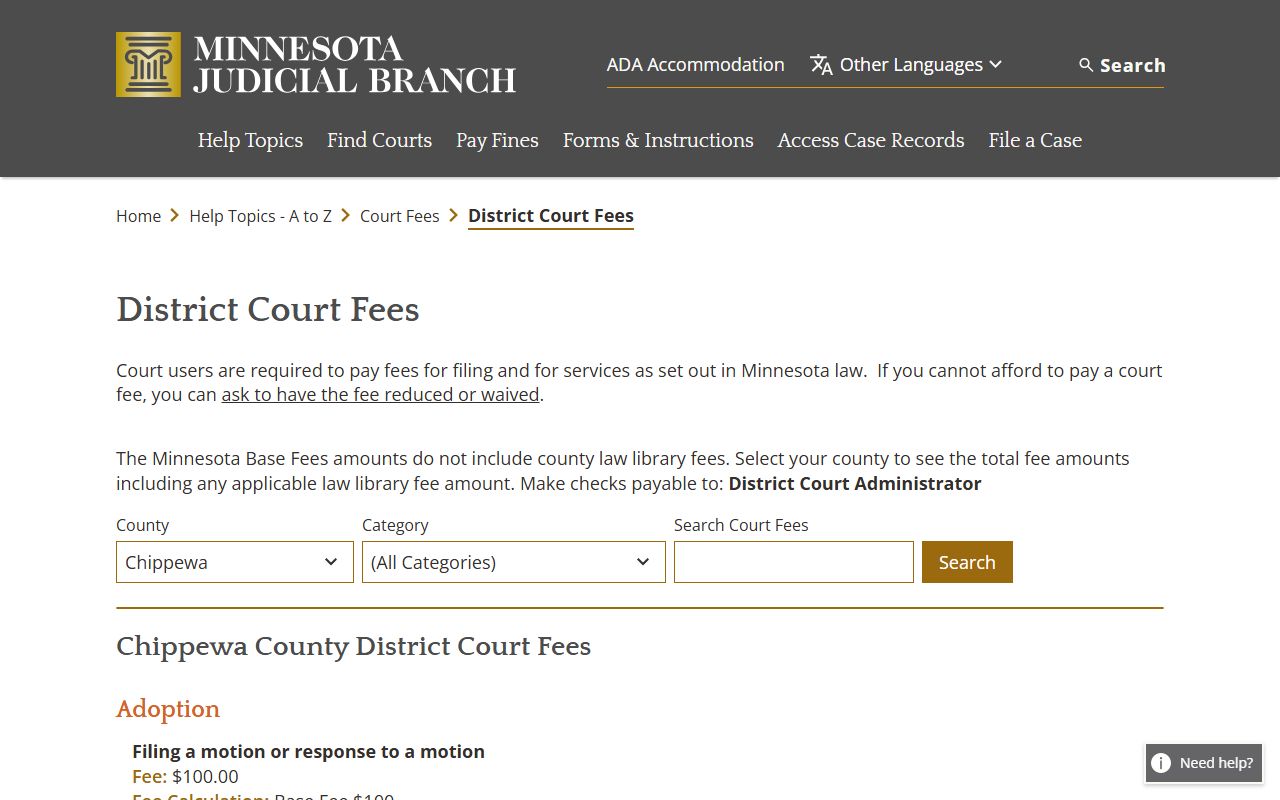
That fee source matters because probate filings, will deposits, and certified copies are priced by the court, not by a private search site.
Chippewa County Probate Terms
Probate files use terms that do not appear in ordinary civil cases. These definitions help separate estate work from guardianship and conservatorship work before a person searches MCRO or contacts Court Administration.
- Testator
- A person who made a will.
- Executor
- A person named to carry out a will. Minnesota court materials often use personal representative for the person appointed to administer the estate.
- Intestate
- A death without a will, which may require court administration under Minnesota probate law.
- Guardianship
- A court-supervised case about a person's care, health, residence, and personal needs.
- Conservatorship
- A court-supervised case about managing an incapacitated person's money, assets, or financial affairs.
Guardianship and conservatorship files can contain medical, financial, and personal information. Public case details may appear online, but sensitive documents or data can be restricted.
Search Chippewa County Probate Records
Use Minnesota Court Records Online for a public Chippewa County probate records search. MCRO is statewide, free, and unofficial. It can show case details, registers of actions, hearings, and public documents when remote access is allowed. For probate, MCRO notes that online documents are available for documents filed on or after July 1, 2015 in Formal Probate, Other Probate, Guardianship and Conservatorship, and Trust case types. Older material and some public courthouse records may not be available remotely.
- Open MCRO Case Search and accept the terms that explain the record is not certified.
- Choose a name search or case-number search. A decedent, protected person, petitioner, or party name may help identify the probate case.
- Open additional search options and select Probate or Mental Health as the case category.
- Use the court location selector to choose Chippewa County instead of searching every Minnesota court location.
- Review the case details, register of actions, hearings, and any public documents shown online.
- Contact Chippewa County Court Administration for certified copies, older probate records, or records that are public only at a courthouse terminal.
Note: MCRO is useful for lookup, but certified probate copies come from local Court Administration.
Chippewa County Probate Court Contact
The only researched local probate venue is the Probate Division of Chippewa County District Court in Montevideo. The court page lists the same address and phone for probate questions as the District Court office. Free public parking is available, and regular business hours are Monday through Friday.
Probate Division of Chippewa County District Court
629 N. 11th Street
Montevideo, MN 56265
320-269-7774
Monday-Friday, 8:00 a.m. to 4:30 p.m.
For related marriage records or genealogy material, the Chippewa County Recorder is a separate office. Probate case files stay with District Court Administration, while Recorder records include marriage licenses, marriage certificates, land records, military discharges, and genealogy-accessible county records dating back to the 1860s.
The county's courthouse drop box may be useful for some paperwork, but it should not be treated as automatic permission to file a probate case or pay a probate fee that way. The Recorder page says the box is by the East main doors and is checked in the morning and around noon. Confirm with Court Administration before leaving a probate filing, will deposit, or certified-copy payment there.
Chippewa County Probate Fees
Chippewa County probate filing and copy fees come from the District Court fee schedule. The same schedule also lists copy fees for civil and criminal proceedings, so a probate requester should confirm the current category and amount before mailing payment or visiting the counter.
| Item | Amount |
|---|---|
| Estates, trusts, guardianships, conservatorships first paper filed | $310 |
| Deposit of wills for safekeeping | $27 |
| Certified court copy | $14 |
| Exemplified and certified copy | $28 |
| Uncertified copy of an instrument from a civil or criminal proceeding | $0 |
If a probate filing is mailed or left through a courthouse drop box, confirm with Court Administration first. Some filings, signatures, fees, or certified-copy requests may require specific handling.
Chippewa County Probate Record Contents
A probate record can show the type of proceeding, filing date, party names, notices, appointments, orders, inventories, accountings, and closing filings. A trust, guardianship, or conservatorship case may also show case events tied to account reviews, protected-person reports, or court supervision. The register of actions is often the best first view because it lists filings and orders in date order.
The Governor's official notice about a 2024 Eighth Judicial District appointment chambered in Montevideo provides local court context for the district that hears Chippewa County probate records.
The 2024 appointment announcement is a useful example of how Chippewa County probate records sit inside the broader Eighth Judicial District rather than a stand-alone county probate court.
That district context is important when case events, judge assignment, or regional court administration terms appear in a probate file.
Federal bankruptcy is separate from Chippewa County probate. The Minnesota Bankruptcy CM/ECF login belongs to the federal bankruptcy court system, not the Probate Division of District Court.
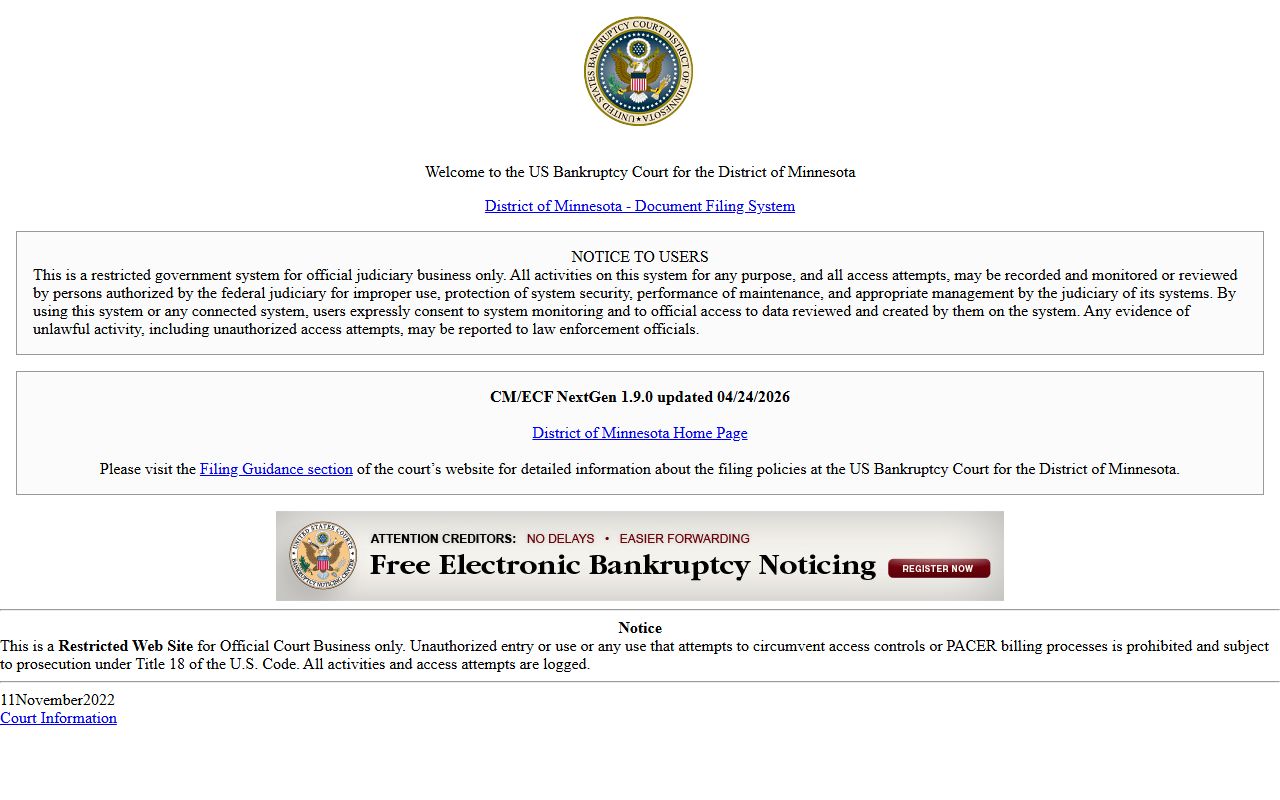
Use bankruptcy sources only when the estate issue has a federal bankruptcy case; ordinary wills, estates, guardianships, and conservatorships remain in Chippewa County District Court.
Restricted Chippewa County Probate Records
Probate documents may include sensitive financial, medical, and family information. Guardianship and conservatorship records can contain confidential components even when the case exists in a public index. Minnesota Rules of Public Access also explain why some courthouse-public documents are not available through remote MCRO access. That limit is especially important for older filings and protected-person cases.
Remote access limits do not always mean the whole file is closed. A requester may see a case caption, register entry, or hearing record online while the underlying document requires courthouse review or a court order. The safer route is to search MCRO first, then ask Chippewa County Court Administration whether the missing probate document is public at the courthouse, confidential, sealed, or simply not available online.
Some record searches cross into criminal, custody, or registration subjects that are not probate. Minnesota's predatory offender registration statute is an example of a separate public-record system with a different legal purpose. Minn. Stat. Section 243.166 is not a probate access rule.
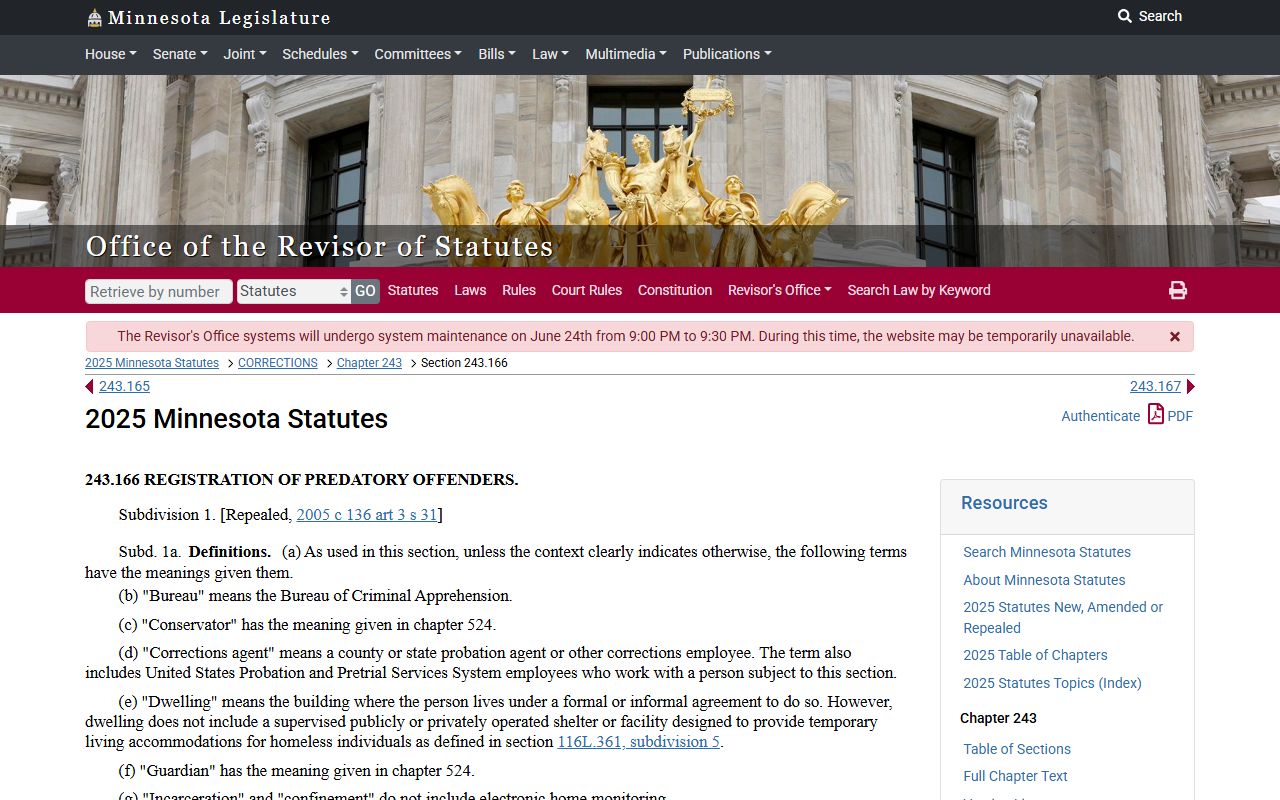
Keep probate searches focused on estates, trusts, guardianships, conservatorships, and will safekeeping unless a court case directly connects the subjects.