
Chippewa County Arrest Records and Court Charges
Chippewa County arrest records are created on the law-enforcement side when a person is taken into custody or booked. Research for the county points to the Sheriff's Office, the in-custody list, and the active warrant listing as the practical places where arrest-related public information may appear. The custody list can show a person in jail with booking number, intake date, charge text, offense level or status, statute number, case number if tied to a case, and bail or bond information.
Court charges after arrest are different. They become part of the District Court case file once the prosecutor files or pursues formal charges. That court charge record can later show plea activity, hearings, disposition, sentence, probation, fines, and fees. The Chippewa County criminal court records page is the right place for the full criminal case file and outcome. The Chippewa County inmate records page is the better source for current jail custody and roster fields.
Find Chippewa County Arrest Records and Charges
Start with the source that matches the question. For current custody, use the Chippewa County Jail in-custody list. For active local warrants, use the Chippewa County active warrant listing. For filed court charges and charge outcomes, use MCRO Case Search and filter the court location to Chippewa. For local questions about law-enforcement data not posted online, contact the Sheriff's Office.
- Check the jail in-custody list if the person may be held in the Chippewa County Jail.
- Check the active warrant list if the issue may involve a failure-to-appear or other active warrant.
- Search MCRO by name, case number, or citation number for the filed District Court case.
- Read the charge text, statute number, offense level, court events, and disposition together.
- Contact the Sheriff's Office or Court Administration for records that are not posted online or need certification.
The MCRO overview image assigned to this arrest and charge page is sourced from the Minnesota Judicial Branch MCRO access page.
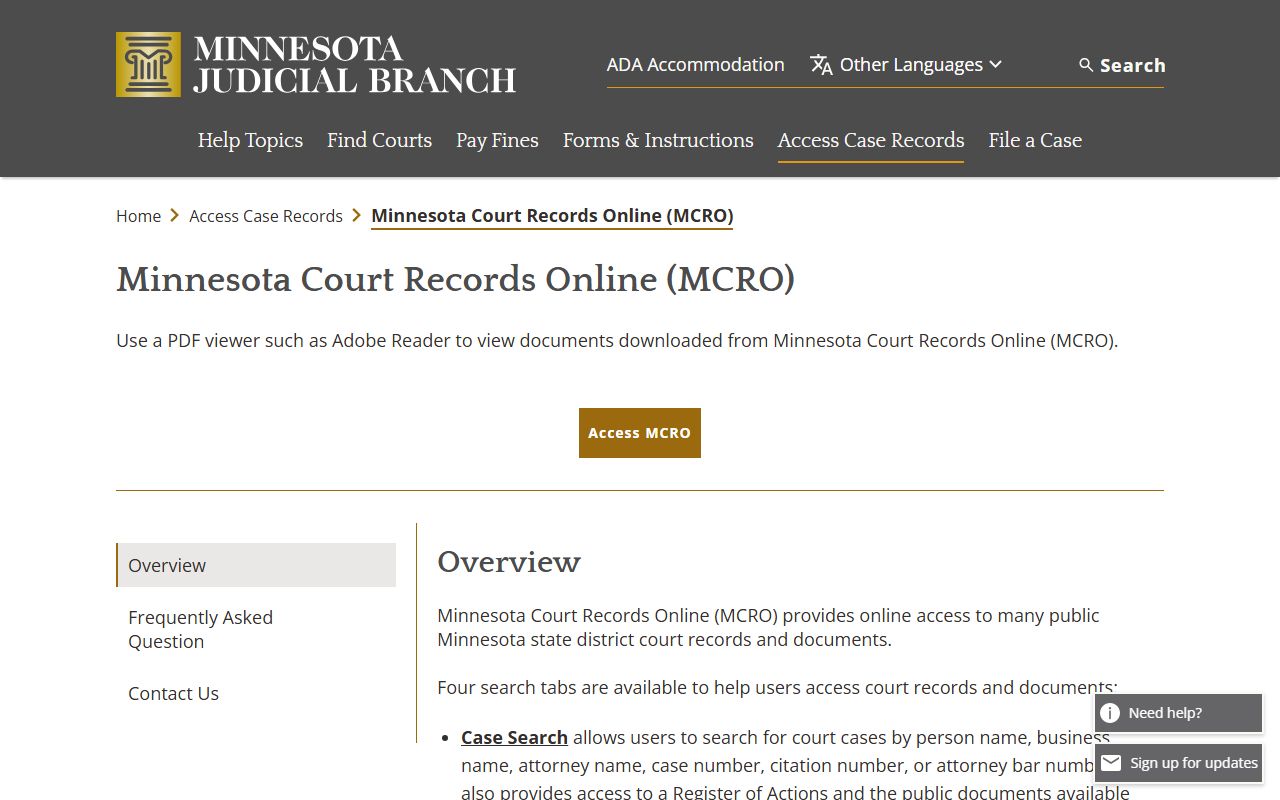
MCRO is where arrest-related allegations become searchable filed court charges, if the case is public and remotely available.
Chippewa County Charge Sources
The Sheriff's public custody and warrant tools are list-based, not formal search forms. The in-custody list displays a timestamp and shows each listed person with a photo placeholder or image, MNI, name, sex, age, booking number, intake date and time, charges, and bail or bond. The warrant list shows warrant number, name, date of birth, warrant date, bond or bail amount, offense level, and description. Both tools are useful, but neither is the final court outcome.
| Source | Charge-Related Fields |
|---|---|
| Jail in-custody list | MNI, name, sex, age, booking number, intake date, charge text, statute number, case number if shown, offense level or status, and bail or bond. |
| Active warrant listing | Warrant number, name, date of birth, warrant date, bond or bail amount, offense level, and description such as failure-to-appear or offense text. |
| MCRO criminal case | Case number, parties, filed charges, hearings, pleas, register of actions, disposition, sentence, fines, fees, and public documents where available. |
Note: A roster charge can be pending, tied to a warrant, a DOC hold, sentenced status, or another custody designation.
Charges After Arrest in Chippewa County
The research file documents complaints, citations, charging statutes, offense levels, and charge details as parts of criminal court records. It does not identify a separate local grand-jury or information process page for Chippewa County, so charging-document labels should be read through the actual District Court case, not assumed from the arrest alone. The key practical rule is simple: booking data can list an allegation, but the court case shows what was filed and how it changed.
| Document Type | How to Treat It in a Chippewa County Charge Search |
|---|---|
| Complaint | Research identifies complaint as a document that can start a civil case or allege criminal facts. |
| Information | No Chippewa-specific source in the research file documented local use; confirm from the actual District Court case if this label appears. |
| Indictment | No Chippewa-specific source in the research file documented local use; confirm from the actual District Court case if this label appears. |
Chippewa County Charge Status
Charge status can change as the court case moves. A charge may be pending at first appearance, amended as the prosecutor or court record changes, reduced as part of a case resolution, dismissed with prejudice, dismissed without prejudice, or resolved by plea, verdict, or other disposition. The research glossary defines disposition as the final result of a charge or case, which is why the disposition line must be checked before drawing a conclusion.
| Status | What It Means |
|---|---|
| Pending | The charge is listed but has not yet reached a final public disposition. |
| Amended or reduced | The charge was changed from an earlier allegation or severity level shown in the case history. |
| Dismissed with prejudice | The charge or claim was dismissed and cannot be refiled. |
| Dismissed without prejudice | The charge or claim was dismissed but may be refiled. |
| Disposition entered | The record shows the final result for the charge or case. |
Chippewa County Charges vs Convictions
Charges and convictions should not be treated as the same thing. An arrest-related charge may appear on a jail roster, warrant list, citation, or MCRO case before the court reaches a final result. A conviction appears only after a guilty plea, guilty verdict, or other guilt result is recorded. This distinction is important for Chippewa County arrest records because a person may be booked or charged without being convicted.
| Charge | Conviction | |
|---|---|---|
| Stage | Allegation or filed count. | Final guilt result by plea or finding. |
| Where it may appear | Jail list, warrant list, citation, or MCRO case record. | MCRO disposition and sentence entries. |
| What to check | Later amendments, reductions, dismissals, and hearings. | Sentence, probation, fines, fees, and expungement entries. |
Chippewa County Attorney Charge Role
The Chippewa County Attorney is the local prosecutor for Chippewa County criminal matters. Research identifies Matthew Haugen as County Attorney. The county office page lists the address as 221 North First Street, P.O. Box 219, Montevideo, Minnesota, and the phone as 320-269-7138. The staff directory confirms the same County Attorney contact. The office page does not publish a division chart or prosecutor count, so the court record should be used to identify counsel in a specific case.
The Chippewa County Attorney image assigned to this page comes from the official county attorney page.
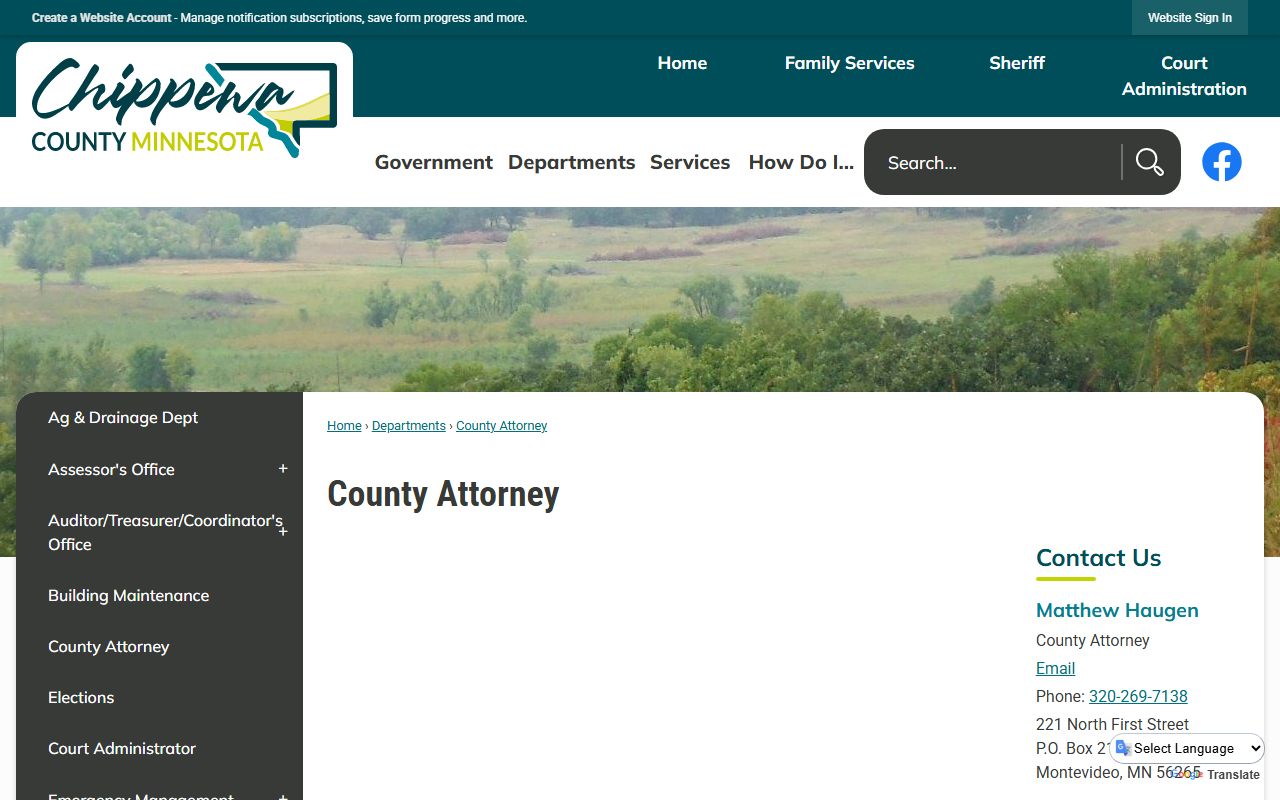
That office is relevant because prosecutor action is what turns arrest allegations into filed court charges.
The staff-directory image assigned to this page is sourced from the Chippewa County Attorney staff directory entry.
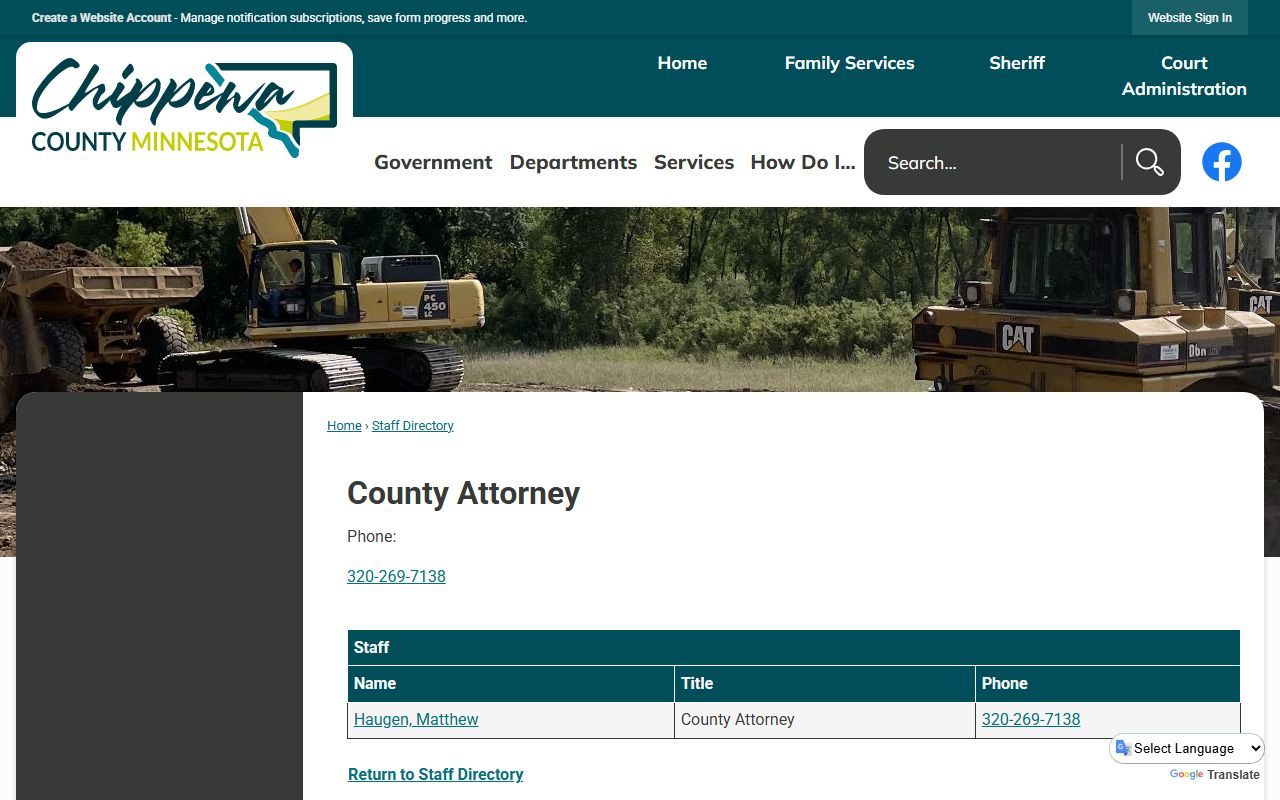
The directory supports the local prosecutor contact detail without adding unsupported division or staffing claims.
Arrest Records and Law Enforcement Data
Arrest records, request-for-service records, investigative records, and custody-related law-enforcement data are governed differently from judicial case records. Minnesota Statutes section 13.82 is the key law-enforcement data statute cited in the research file. It matters because Sheriff's Office records and District Court records are not the same file, even when they describe the same incident or person.
For law-enforcement data not posted on the public custody or warrant list, contact the Chippewa County Sheriff's Office. The Sheriff is Derek Olson. The Sheriff's Office and Law Enforcement Center are at 629 N 11th Street, Suite 14, Montevideo, Minnesota, with phone 320-269-2121. The FAQ also lists 320-269-2122 for non-emergency deputy contact. Some active investigations, sealed warrants, juvenile matters, and search-warrant materials may not be public.
The law-enforcement data image assigned to this page comes from Minnesota Statutes section 13.82.
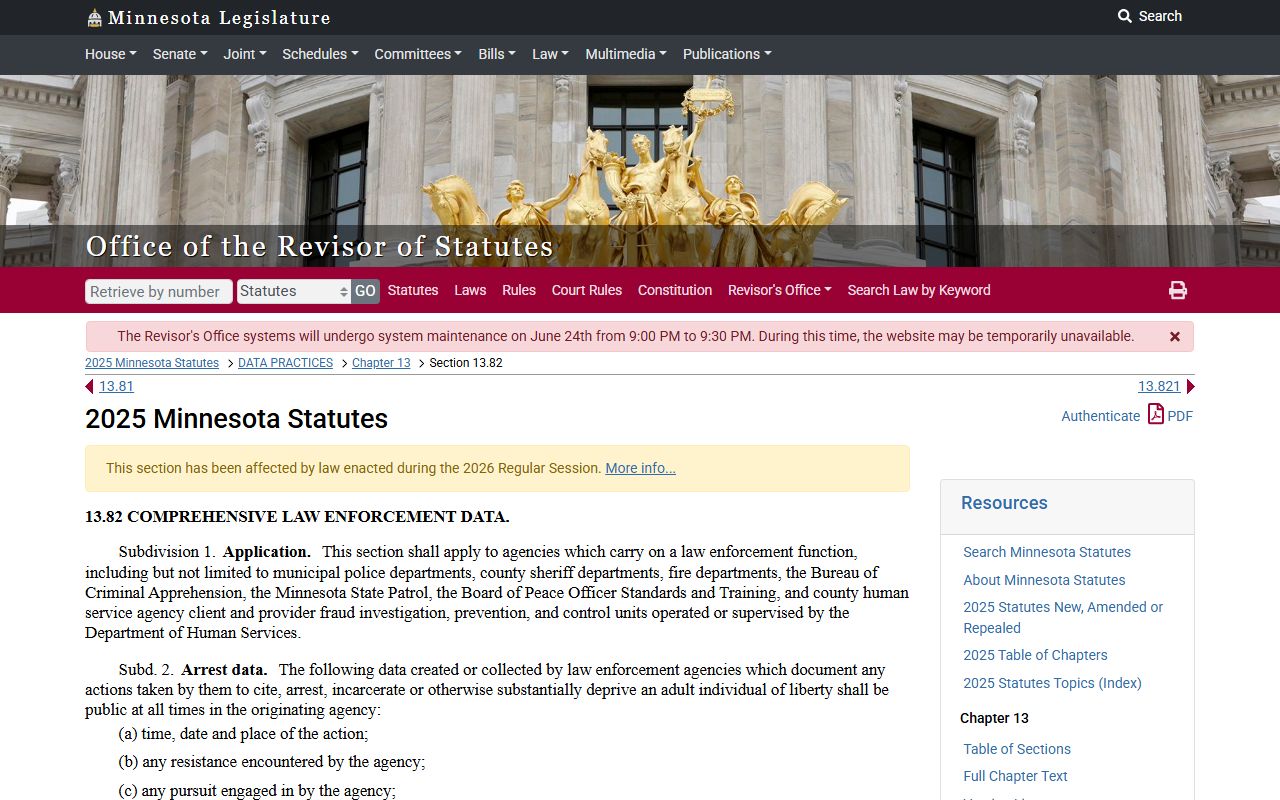
That statute helps explain why a Sheriff's arrest record and a District Court charge record can have different access rules.
Restricted Chippewa County Arrest Records
Restricted or sealed records can affect both arrest information and filed charges. Juvenile delinquency, child protection, sealed criminal matters, expunged records, domestic abuse, harassment, and sensitive identifiers may be limited or withheld. Minnesota's Clean Slate law and petition-based expungement can seal qualifying criminal records from public view, but they do not guarantee that every government agency loses access for every purpose.
| Sealed | Expunged | |
|---|---|---|
| Public access | Hidden or limited from general public view. | Sealed from public view when automatic relief or a court order applies. |
| Related records | May apply to case records, warrants, or sensitive documents. | May require identifying agencies that hold arrest and court records. |
| Practical step | Check the court record and access rule. | Use the correct case number and follow the Minnesota expungement process. |
Chippewa County Charge Outcomes
Some charge outcomes connect to local court-support programs. Chippewa County participates in 6W Community Corrections, which serves Chippewa, Lac qui Parle, Swift, and Yellow Medicine Counties. The county page says 6W provides court-ordered and Department of Corrections supervision, adult and juvenile diversion, investigative reports for local courts, cognitive skills programming, domestic violence education, and other interventions. A sentence or probation entry in a criminal case may therefore refer to regional supervision rather than only a single-county probation office.
Chippewa County also has official Restorative Justice and Circle Sentencing materials. The county mission language focuses on restoring justice for the victim, child, and community, holding the offender accountable, repairing harm, and giving citizens a voice in an effective sentence. Those local programs do not replace the court charge record, but they can help explain why a docket or sentence entry mentions community-based programming.
The 6W Community Corrections image assigned to this page is sourced from the Chippewa County 6W Community Corrections page.
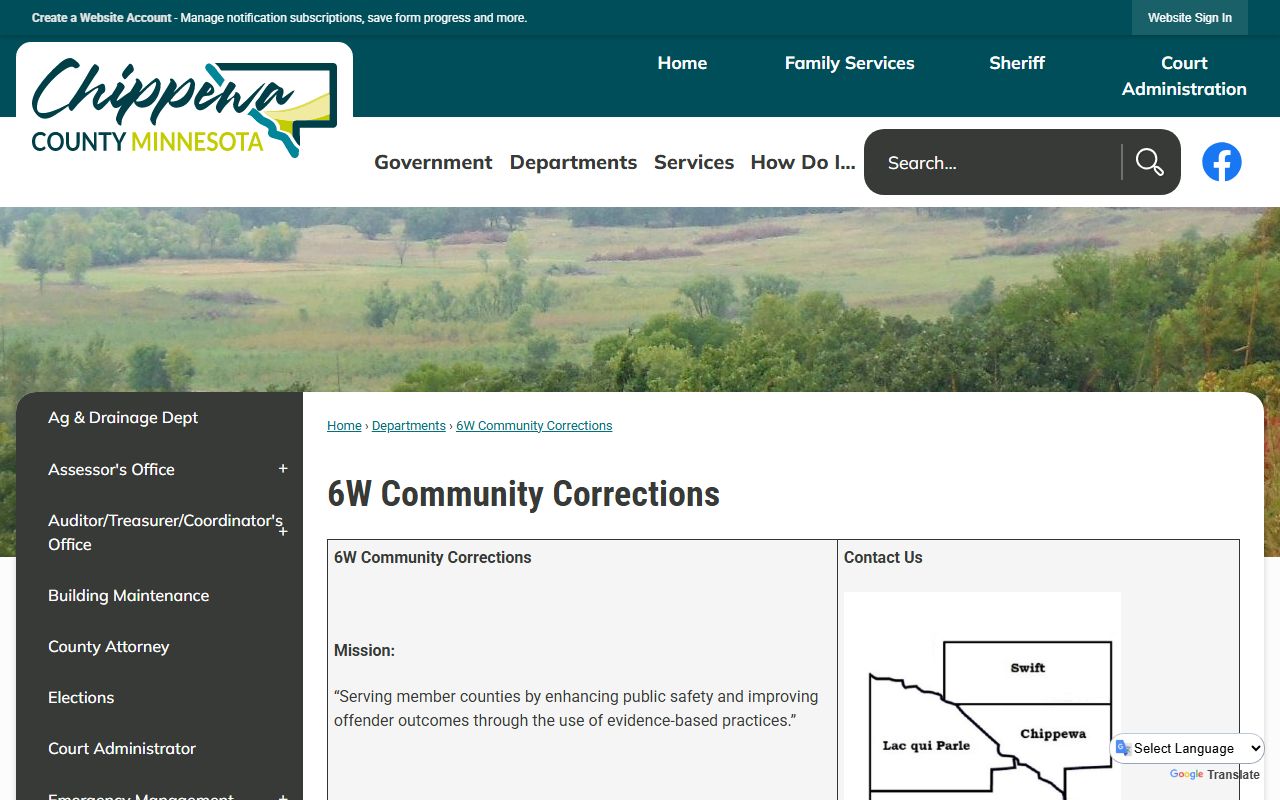
That source is relevant when court charges lead to supervision, diversion, investigative reports, or domestic-violence education.
The Restorative Justice image assigned to this page comes from the Chippewa County Restorative Justice page.
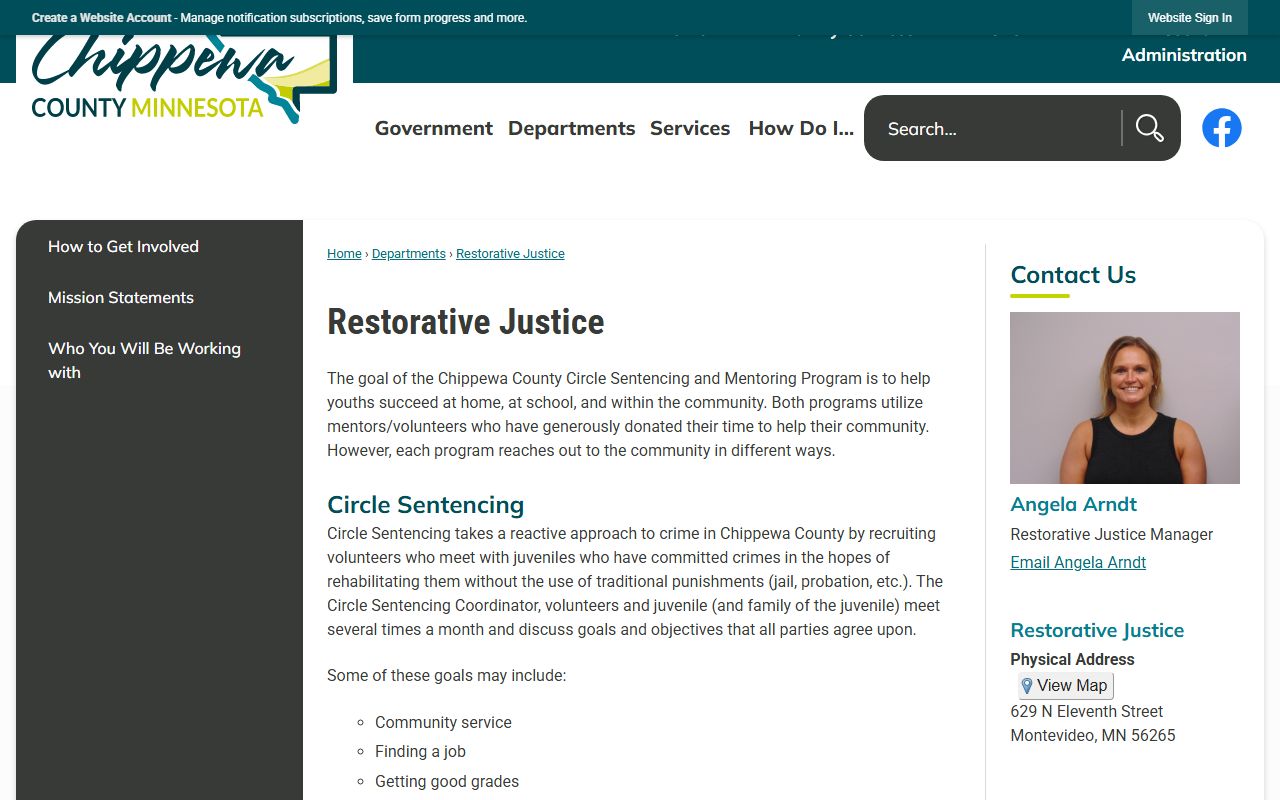
Restorative Justice is local context for some court outcomes, but the filed charge and disposition still need to be read in the District Court record.